Heat styling natural hair is a topic that sparks endless debate in the hair care community. While some swear by regular flat ironing for versatility, others warn of irreversible damage. The truth lies somewhere in between, rooted in the science of hair structure and thermal styling. Understanding how heat affects natural hair at a molecular level can help you make informed decisions about heat styling while minimizing potential harm.
Understanding Natural Hair Structure
Natural hair differs significantly from chemically relaxed or color-treated hair in its protein structure and moisture content. Each strand consists of three layers: the medulla at the core, the cortex in the middle containing proteins and pigments, and the cuticle on the outside made of overlapping scales. Type 3 and Type 4 hair patterns feature a naturally elliptical or flattened shaft shape, which creates the characteristic curl pattern but also makes the hair more vulnerable to damage.
The bonds within the cortex determine your hair's shape and resilience. Hydrogen bonds are temporary and break with water or heat, allowing you to temporarily straighten curls. This is exactly how heat styling works: the flat iron breaks these hydrogen bonds temporarily, reshaping your hair from coily to smooth until the next time water touches it. Disulfide bonds are much stronger and permanent, formed between sulfur-containing amino acids in the keratin protein. These bonds can only be altered through chemical treatments or extreme heat damage.
What Happens When You Apply Heat
When you press a flat iron to your hair, several processes occur simultaneously at the molecular level. The heat initially breaks hydrogen bonds in the hair shaft, allowing the curl pattern to be temporarily reshaped into a straight configuration. Water molecules trapped in the hair shaft begin to evaporate, which is why you might see steam rising from the iron. This moisture loss is a double-edged sword: it's necessary for straightening, but excessive drying leads to brittleness and breakage.
At temperatures above 350°F, the hair's protein structure begins to undergo a process called thermal degradation. The keratin proteins can denature, meaning they lose their natural structure and function. Repeated exposure to high heat can gradually weaken disulfide bonds, leading to what's commonly called heat damage or heat training. This manifests as sections of hair that no longer revert to their natural curl pattern even after washing.
The cuticle layer is particularly vulnerable during heat styling. High temperatures can cause the protective scales to lift, crack, or even melt together, creating a rough surface that tangles easily and loses shine. Once cuticle damage occurs, the inner cortex becomes exposed to environmental stressors, accelerating overall hair deterioration.
Temperature Matters More Than You Think
The temperature setting on your flat iron is the single most critical factor in preventing heat damage. Research on keratin degradation shows that significant protein damage begins around 350°F to 400°F for most hair types. However, the ideal temperature varies based on your hair's texture, density, and overall health.
Fine or color-treated natural hair should typically be straightened between 300°F and 350°F. These lower temperatures reduce the risk of protein breakdown while still providing adequate heat for smoothing. Medium-density natural hair can generally tolerate temperatures between 350°F and 380°F. This range balances effectiveness with safety for most Type 3 and Type 4 hair patterns. Thick, coarse, or highly textured hair may require temperatures between 380°F and 400°F for effective straightening. However, even with coarse hair, exceeding 400°F significantly increases damage risk with minimal additional benefit.
Many flat irons on the market reach temperatures of 450°F or higher, but these extreme settings are rarely necessary for natural hair and dramatically increase the likelihood of permanent damage. The key is finding the lowest effective temperature for your specific hair type.
The Role of Moisture and Protein Balance
Natural hair's resilience to heat styling depends heavily on its moisture and protein content before you even pick up the flat iron. Hair with adequate moisture can better withstand heat because water molecules help distribute thermal energy more evenly throughout the strand. Severely dehydrated hair, on the other hand, is more prone to scorching and breakage.
The protein-moisture balance is equally important. Hair needs sufficient protein structure to maintain its integrity under stress, but too much protein without adequate moisture makes hair stiff and brittle. This is why deep conditioning treatments before heat styling are not just recommended but essential. Protein treatments can temporarily fortify the hair shaft, while moisturizing treatments ensure flexibility and prevent excessive dryness during the straightening process.
One innovative approach combines moisture and protein in a single step. Products that blend nourishing oils with protein-rich ingredients can prepare hair for heat while simultaneously protecting it. For instance, formulations containing honey, molasses, and aloe vera provide intense hydration, while virgin coconut oil delivers protein that actually strengthens during the heat styling process rather than breaking down.
Heat Protectants: Do They Actually Work?
Heat protectant products are not just marketing hype; they serve genuine protective functions when used correctly. These formulations typically contain ingredients that form a barrier between your hair and the hot plates of your flat iron.
Silicones like dimethicone and cyclomethicone are common heat protectants that coat the hair shaft with a thin film. This barrier reduces direct heat transfer and helps seal moisture inside the strand. While some people avoid silicones for various reasons, they are scientifically proven to reduce thermal damage when heat styling. Polymers and proteins in heat protectants can also temporarily strengthen the hair shaft, providing additional resilience against high temperatures.
Virgin coconut oil stands out as a particularly effective natural heat protectant. Unlike most oils that break down under high heat, coconut oil's unique fatty acid structure allows it to withstand temperatures commonly used in flat ironing without losing its protective properties. The protein naturally present in virgin coconut oil can penetrate the hair shaft, providing structural reinforcement from the inside out. When heat is applied, this protein layer actually helps seal and protect the hair cuticle, creating a smooth, frizz-resistant finish.
Some products contain humectants like glycerin or propylene glycol, which can help maintain moisture levels during the styling process. However, these ingredients must be balanced carefully; too much moisture on the hair when flat ironing can actually cause more steam damage.
For maximum protection, heat protectants should be applied to clean, damp hair and allowed to absorb fully before blow-drying. A second layer can be applied to dried sections immediately before flat ironing. Using a quality heat protectant can reduce heat damage by up to 50% according to some studies, making it a non-negotiable step in any heat styling routine.
The protectant that actually works
Virgin coconut oil that penetrates — not just coats.
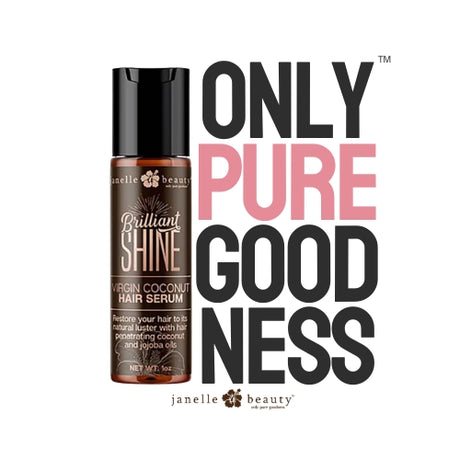
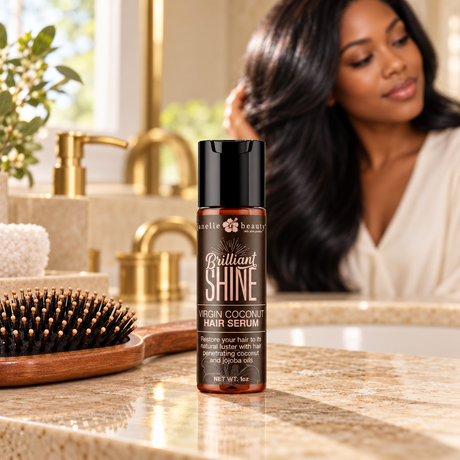
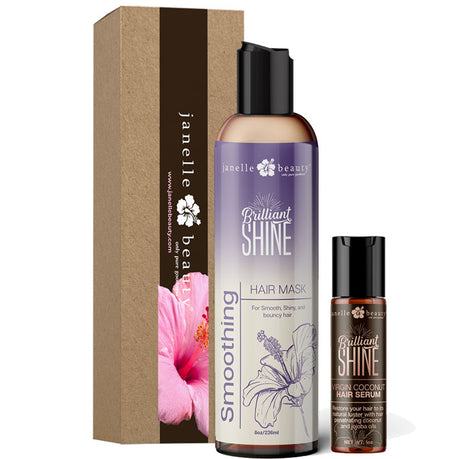
The Janelle Beauty® Virgin Coconut Hair Serum is built around the same science described above — a heat-activated formula that strengthens from the inside out while shielding your strands from flat iron temperatures.
Shop Virgin Coconut Hair Serum →Technique Determines Damage as Much as Temperature
Even with the perfect temperature setting and quality heat protectant, poor technique can still cause significant damage. The speed at which you pass the flat iron through your hair, the number of passes required, and the tension applied all affect the outcome.
Taking multiple passes over the same section is one of the most common mistakes people make when flat ironing natural hair. Each pass exposes the hair to prolonged heat, multiplying the potential for damage. Ideally, you should aim to straighten each section in one to two passes maximum. This requires using appropriately sized sections; working with hair sections that are too thick will require multiple passes to achieve smoothness.
The speed of your passes matters significantly. Moving the flat iron too slowly prolongs heat exposure, while moving too quickly may not provide enough heat for effective straightening. The optimal speed is typically one to two seconds per pass on a three-to-four-inch section, but this varies with your specific hair and iron.
Tension is another overlooked factor. Pulling the hair taut while flat ironing can enhance smoothness but also stresses the hair shaft mechanically. Combining mechanical stress with thermal stress increases the risk of breakage. A gentle, controlled motion works better than aggressive pulling.
Can You Flat Iron Regularly Without Damage?
The question of frequency is perhaps the most contentious in the natural hair community. The honest answer is that any heat styling carries some risk, but the cumulative effect depends on multiple factors including your hair's natural resilience, your technique, and how well you care for your hair between heat sessions.
For most people with natural hair, limiting flat ironing to once every four to six weeks allows sufficient time for the hair to recover and for you to replenish moisture and protein. Some individuals with particularly resilient hair may tolerate more frequent heat styling, while others may experience damage even with infrequent use.
The concept of heat training, where repeated heat styling permanently alters the curl pattern, is real but often misunderstood. This occurs when frequent high-heat exposure progressively damages the disulfide bonds responsible for curl formation. Some people intentionally heat train to loosen their curl pattern, while others experience it as unwanted damage. The line between the two is often just a matter of perspective.
Signs Your Hair Is Heat Damaged
Recognizing heat damage early can prevent further deterioration. Unlike temporary dryness or frizz, true heat damage involves structural changes to the hair shaft that cannot be reversed without cutting.
The most obvious sign is loss of curl pattern in certain sections. If parts of your hair remain straight or limp after washing and conditioning, those areas have likely sustained protein damage that altered their natural structure. Heat-damaged hair often has a rough, straw-like texture even when properly moisturized, due to cuticle destruction. Split ends and excessive breakage are also common, as damaged hair loses its elasticity and tensile strength.
Another telltale sign is differential porosity, where heat-damaged sections absorb and lose moisture much faster than healthy sections. This can make styling and maintaining moisture balance extremely difficult. Color changes can also indicate heat damage; natural hair may develop reddish or brassy tones as melanin pigments in the cortex break down under heat.
Alternatives and Safer Approaches
If your goal is achieving straight or stretched styles without risking heat damage, several alternatives exist. Banding, African threading, and roller sets can stretch natural hair significantly without heat exposure. These methods take longer but work with the hair's natural structure rather than forcing it into a new shape through thermal stress.
For those who prefer the sleekness that only flat ironing provides, a silk press performed by a skilled stylist may be safer than at-home attempts. Professional stylists typically have better quality tools, precise temperature control, and technique perfected through experience. However, even professional silk presses should be spaced appropriately to prevent cumulative damage.
Some people find success with the "chase method," where a fine-tooth comb is used to smooth small sections of hair immediately before the flat iron passes through. This technique can reduce the number of passes needed but requires coordination and practice.
The key to maintaining versatility in your hair routine is understanding that straightening doesn't have to mean permanent change. When done correctly with proper preparation, quality heat protection, and the right products, you can transition from coily to smooth and back to coily without compromising your natural curl pattern. This flexibility allows you to enjoy multiple styling options while keeping your hair healthy and resilient.
The Bottom Line: Minimizing Risk
Can you flat iron natural hair without damage? In absolute terms, any heat styling involves some degree of stress to the hair shaft. However, you can minimize damage to negligible levels through careful attention to temperature, technique, preparation, and frequency.
The key principles are starting with healthy, well-moisturized and fortified hair that's been properly conditioned with both hydrating and protein-rich treatments. Use the lowest effective temperature for your hair type, typically between 300°F and 400°F depending on your texture. Apply quality heat protectants properly, focusing on products that can withstand high heat without breaking down. Perfect your technique to minimize passes over each section, aiming for one to two passes maximum. Limit frequency to allow recovery time between heat sessions, generally every four to six weeks for most hair types. Maintain a strong hair care routine between heat sessions that focuses on moisture retention and protein balance.
For many people, the occasional silk press or flat iron session can be a safe way to enjoy versatility in styling without sacrificing hair health. The difference between damaging heat styling and safe heat styling lies not in whether you use heat, but in how thoughtfully and carefully you approach the process. Understanding the science behind heat damage empowers you to make choices that work for your hair's unique needs and your personal styling preferences.
With over 20 years of evidence from individuals who've successfully maintained their natural curl pattern while regularly wearing their hair straight, it's clear that damage-free heat styling is possible. The secret is in the preparation, protection, and products you choose. When your hair is properly nourished and shielded with the right formulations, you truly can have the best of both worlds: the option to wear smooth, frizz-free straight styles when you want them, and the ability to return to your natural coily or curly texture without permanent alteration or damage.
Janelle Beauty Hair Care
The right products make all the difference.
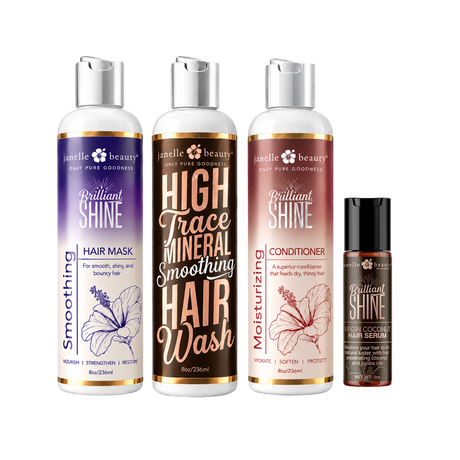
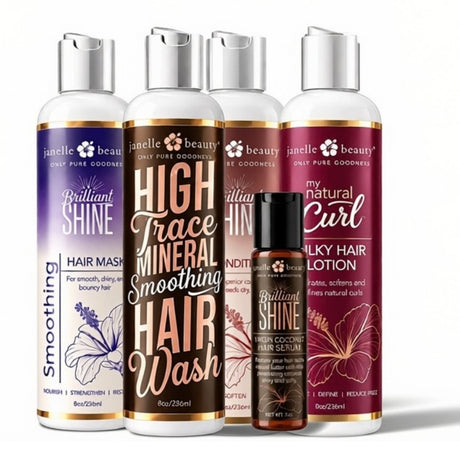
Start with the Virgin Coconut Hair Serum for heat protection, then finish with the Smooth & Shine Duo to lock in sleekness and keep your curl pattern intact wash after wash.
Shop Heat Protection → Shop Smooth & Shine Duo